
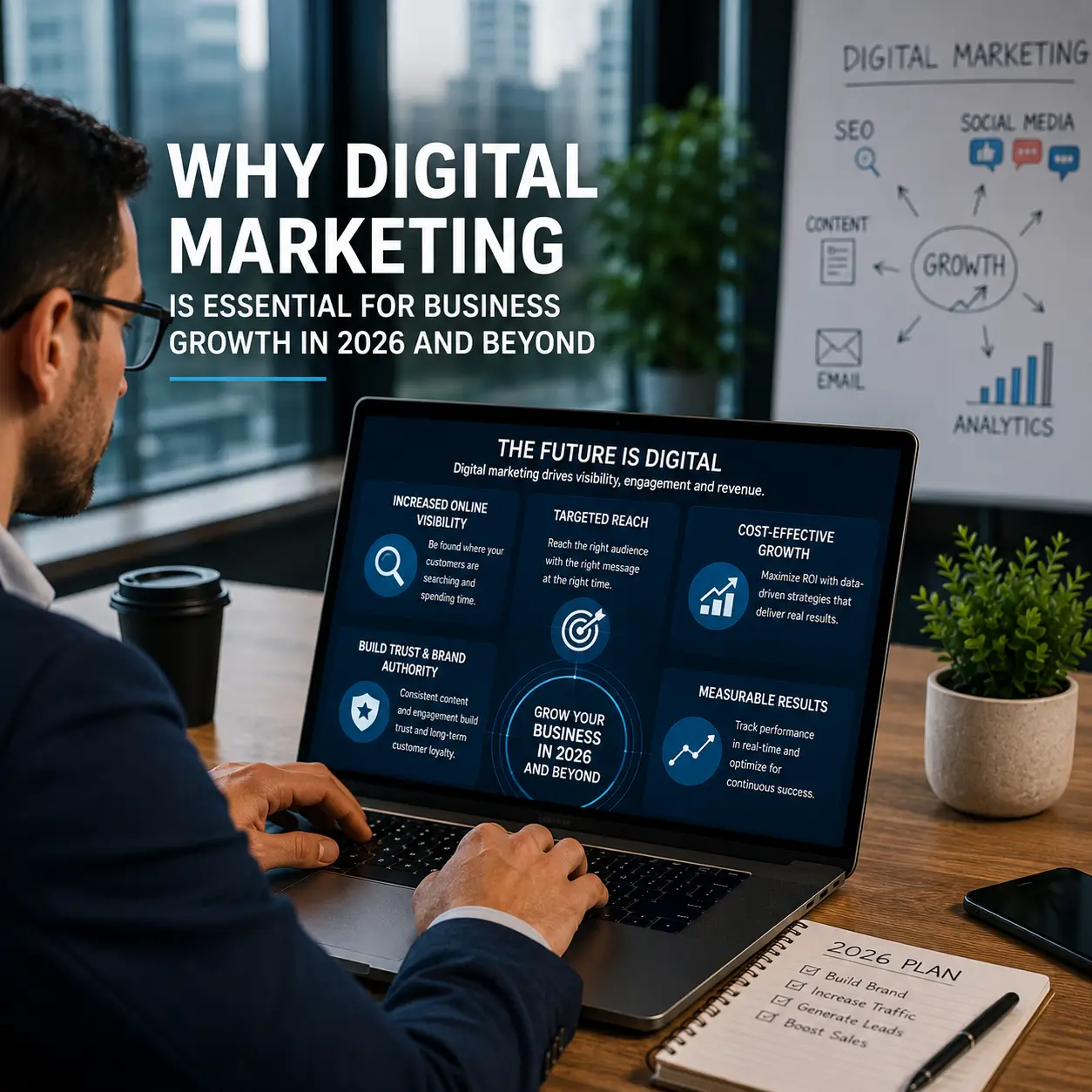
For most businesses, the internet is now the first place customers go when searching for products, services or information. Whether someone is looking for a local tradesperson, comparing software providers or researching a major purchase, the buying journey almost always begins online. This shift in consumer behaviour has transformed digital marketing from an optional business activity into one of the most important drivers of long-term growth.
Digital marketing is far more than simply having a website or running occasional adverts on social media. It is the process of building a consistent online presence that helps potential customers discover, trust and ultimately choose your business over competitors. When managed effectively, digital marketing can generate leads, increase sales, strengthen brand awareness and create long-term relationships with customers that continue to deliver value for years.
One of the biggest advantages of digital marketing is that it allows businesses of every size to compete. A small local company with an excellent online strategy can often outperform much larger competitors that fail to invest in their digital presence. Rather than relying solely on traditional advertising or word-of-mouth recommendations, businesses now have the opportunity to reach highly targeted audiences through search engines, social media, email marketing and content creation.
The challenge is that digital marketing continues to evolve rapidly. New technologies, changing consumer expectations and search engine updates mean businesses must continually review and improve their online strategy to remain competitive. Those that view digital marketing as an ongoing investment rather than a one-off project are usually the ones that achieve the strongest long-term results.
Understanding the Main Pillars of Digital Marketing
Successful digital marketing is built on several complementary channels that work together rather than operating independently. Businesses often make the mistake of focusing entirely on one platform while ignoring the wider customer journey.
Search Engine Optimisation (SEO) remains one of the most valuable long-term marketing investments. Optimising a website so it appears prominently within search engine results allows businesses to attract visitors who are actively looking for their products or services. Unlike paid advertising, high-quality organic rankings can continue delivering traffic long after content has been published.
Pay-Per-Click (PPC) advertising provides another powerful method of generating enquiries. Platforms such as Google Ads allow businesses to target users based on search intent, location and numerous other factors. When campaigns are managed effectively, PPC delivers immediate visibility while complementing longer-term SEO efforts.
Content marketing has become equally important. Publishing informative articles, buying guides, case studies and industry insights helps businesses demonstrate expertise while creating valuable resources that attract both customers and search engines. High-quality content also supports social media marketing, email campaigns and link-building activities.
Social media should no longer be viewed purely as a platform for promotional posts. Businesses increasingly use LinkedIn, Facebook, Instagram, Pinterest and other networks to educate audiences, showcase expertise and build relationships with both existing and potential customers.
Email marketing continues to deliver one of the highest returns on investment when used correctly. Regular newsletters, personalised offers and useful updates help businesses remain visible while encouraging repeat purchases and long-term customer loyalty.
Building Trust Is More Important Than Ever
Modern consumers have almost unlimited choice. Before making purchasing decisions, they often compare websites, read reviews, visit social media profiles and research businesses in considerable detail. Digital marketing therefore extends far beyond simply attracting visitors—it must also establish trust.
Professional websites remain the foundation of a successful digital presence. Fast loading speeds, mobile-friendly design, clear navigation and high-quality content all contribute towards creating positive first impressions. A poorly maintained website can quickly undermine confidence regardless of how effective advertising campaigns may be.
Customer reviews also play an increasingly significant role. Positive feedback on independent platforms provides valuable social proof while reassuring prospective customers that others have had successful experiences with the business.
Consistency across all digital channels strengthens credibility. Branding, messaging and tone of voice should remain aligned whether someone visits the website, reads a blog article, receives an email or interacts through social media. Businesses that present a unified identity often appear more professional and trustworthy.
Authority is another major factor. Publishing expert content, contributing industry insights and regularly updating websites demonstrates knowledge while encouraging search engines to recognise the business as a reliable source of information.
Measuring Results and Improving Performance
One of the greatest strengths of digital marketing is the ability to measure performance accurately. Unlike many traditional forms of advertising, businesses can track how visitors arrive, what actions they take and which marketing activities generate enquiries or sales.
Website analytics provide valuable insight into customer behaviour. Businesses can identify which pages perform well, where visitors leave the website and which marketing channels generate the highest-quality traffic. This information allows marketing budgets to be allocated more effectively while highlighting opportunities for improvement.
Conversion optimisation has become increasingly important. Rather than simply generating more website visitors, many businesses now focus on improving the percentage of visitors who become customers. Small improvements to landing pages, enquiry forms, page speed or calls-to-action can often deliver significant increases in enquiries without increasing advertising expenditure.
Regular analysis should also include competitor activity. Monitoring industry trends, emerging technologies and changes in customer behaviour helps businesses adapt more quickly while maintaining a competitive advantage.
A Long-Term Strategy Delivers the Best Results
The businesses that consistently succeed online rarely rely on a single marketing tactic. Instead, they develop integrated strategies where SEO, content marketing, paid advertising, email campaigns and social media all work together to support common business objectives.
Digital marketing should never be viewed as a short-term expense. It is an investment in future growth, customer relationships and long-term visibility. While some activities, such as paid advertising, can generate immediate enquiries, others like SEO and content marketing continue producing results long after the initial work has been completed.
As technology continues to evolve and artificial intelligence becomes increasingly integrated into marketing platforms, businesses will have even greater opportunities to reach highly targeted audiences and personalise customer experiences. However, the fundamental principles will remain unchanged. Businesses that provide genuine value, publish useful content, build trust and continually refine their online presence will continue to outperform those relying on short-term tactics.
Ultimately, digital marketing is no longer about simply being present online. It is about creating meaningful connections with customers, demonstrating expertise and building a sustainable online presence that supports business growth year after year. Companies that invest consistently in these areas place themselves in a far stronger position to adapt, compete and thrive in an increasingly digital marketplace.