
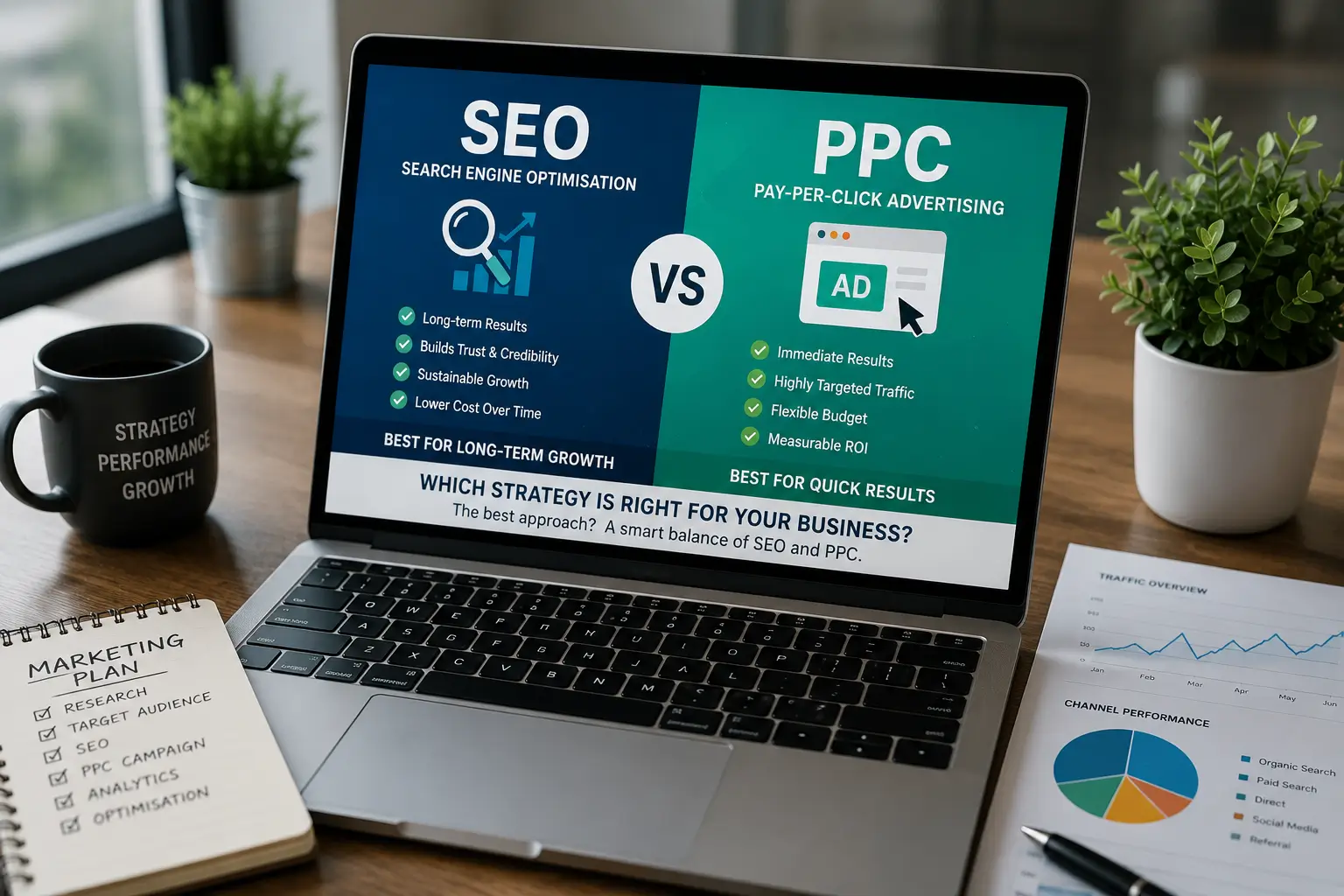
One of the first questions many business owners ask when investing in digital marketing is whether they should focus on Search Engine Optimisation (SEO) or Pay-Per-Click (PPC) advertising. Both channels are designed to generate enquiries and sales through search engines, but they operate in very different ways. Understanding the strengths and limitations of each approach allows businesses to invest their marketing budgets more effectively while building a strategy that supports both immediate and long-term growth.
The reality is that SEO and PPC should not be viewed as competing marketing methods. Instead, they are complementary tools that work best when used together. SEO builds long-term visibility through organic search results, while PPC provides immediate exposure by placing paid adverts in front of people actively searching for products or services. The balance between the two will depend on business goals, available budget, competition and the timescale for achieving results.
Businesses that understand how these channels interact often achieve significantly stronger performance than those relying exclusively on one approach. Rather than asking which method is better, the more valuable question is how both can work together to create a sustainable marketing strategy.
Understanding the Benefits of Search Engine Optimisation
Search Engine Optimisation focuses on improving a website so that it ranks naturally within search engine results. Unlike paid advertising, businesses do not pay every time someone clicks on an organic listing. Instead, they invest in creating high-quality websites, publishing useful content and building authority so search engines recognise them as trustworthy resources.
One of SEO’s greatest strengths is its long-term value. Once strong rankings have been achieved, a well-optimised website can continue attracting qualified visitors for months or even years with relatively modest ongoing maintenance. Every new article, service page or buying guide becomes another opportunity for potential customers to discover the business through relevant searches.
SEO also tends to build greater credibility. Many users naturally trust organic search results more than advertisements because they view them as recommendations from the search engine rather than paid placements. Appearing prominently in organic listings often strengthens brand authority while increasing customer confidence.
Another major advantage is the breadth of keywords that SEO can target. Rather than focusing only on highly commercial search terms, businesses can create informative content answering customer questions, solving problems and addressing every stage of the buying journey. This allows companies to attract potential customers long before they are ready to make a purchasing decision.
The main disadvantage of SEO is that it requires patience. Results rarely appear overnight, particularly in competitive industries. Businesses must consistently invest in technical optimisation, content creation, internal linking and authority building before significant ranking improvements become visible.
The Strengths of Pay-Per-Click Advertising
While SEO focuses on long-term growth, PPC advertising provides immediate visibility. Platforms such as Google Ads allow businesses to appear at the top of search results almost instantly by bidding on selected keywords.
For new businesses or companies launching new products, PPC offers a valuable opportunity to generate enquiries while longer-term SEO campaigns begin to gain traction. Campaigns can also be highly targeted, allowing advertisers to focus on specific geographic areas, devices, times of day or customer demographics.
One of PPC’s greatest advantages is control. Budgets can be adjusted daily, adverts can be tested against one another and performance can be measured in remarkable detail. Businesses can quickly identify which keywords generate enquiries, which adverts attract the highest click-through rates and which landing pages convert visitors into customers most effectively.
PPC also supports seasonal marketing exceptionally well. Businesses promoting limited-time offers, new product launches or time-sensitive campaigns can increase visibility almost immediately without waiting for organic rankings to improve.
However, PPC has limitations. Traffic generally stops as soon as advertising budgets are paused. In highly competitive industries, cost-per-click can become expensive, meaning businesses must carefully monitor campaign performance to ensure advertising remains profitable.
Why Combining SEO and PPC Delivers Better Results
Many successful businesses no longer choose between SEO and PPC—they integrate both into a single digital marketing strategy.
PPC can provide immediate enquiries while SEO develops long-term organic visibility. Data collected from advertising campaigns often reveals which keywords generate the highest-quality enquiries, allowing businesses to prioritise those same terms within their SEO strategy.
Similarly, successful SEO content can identify topics that perform well organically before additional advertising budgets are invested. This creates valuable feedback between the two channels, improving marketing efficiency over time.
Businesses also benefit from occupying multiple positions within search results. Appearing in both paid advertisements and organic listings increases overall visibility while reinforcing brand recognition. Users frequently encounter the same business several times during their research process, helping build familiarity and trust.
Remarketing campaigns provide another example of integration. Visitors who originally discover a website through organic search can later be re-engaged through carefully targeted PPC advertisements, encouraging them to return and complete an enquiry or purchase.
Building a Long-Term Digital Marketing Strategy
The most effective digital marketing strategies are those built around long-term business objectives rather than short-term results. While PPC offers immediate visibility, SEO creates lasting authority that continues delivering value well into the future.
Businesses should regularly review marketing performance, monitor customer behaviour and refine both SEO and PPC campaigns based on measurable data rather than assumptions. High-performing landing pages, informative content and carefully managed advertising campaigns all contribute towards improving return on investment over time.
As search engines continue evolving and artificial intelligence influences how people discover information online, businesses that consistently invest in both organic and paid visibility will be better positioned to adapt to changing consumer behaviour.
Ultimately, SEO and PPC should never be viewed as opposing strategies. Each offers unique strengths, and together they create a balanced marketing approach capable of generating immediate enquiries while building sustainable long-term growth. Businesses that successfully combine both channels often achieve greater visibility, stronger brand authority and a more reliable flow of enquiries than those relying on either method alone.